



Platform
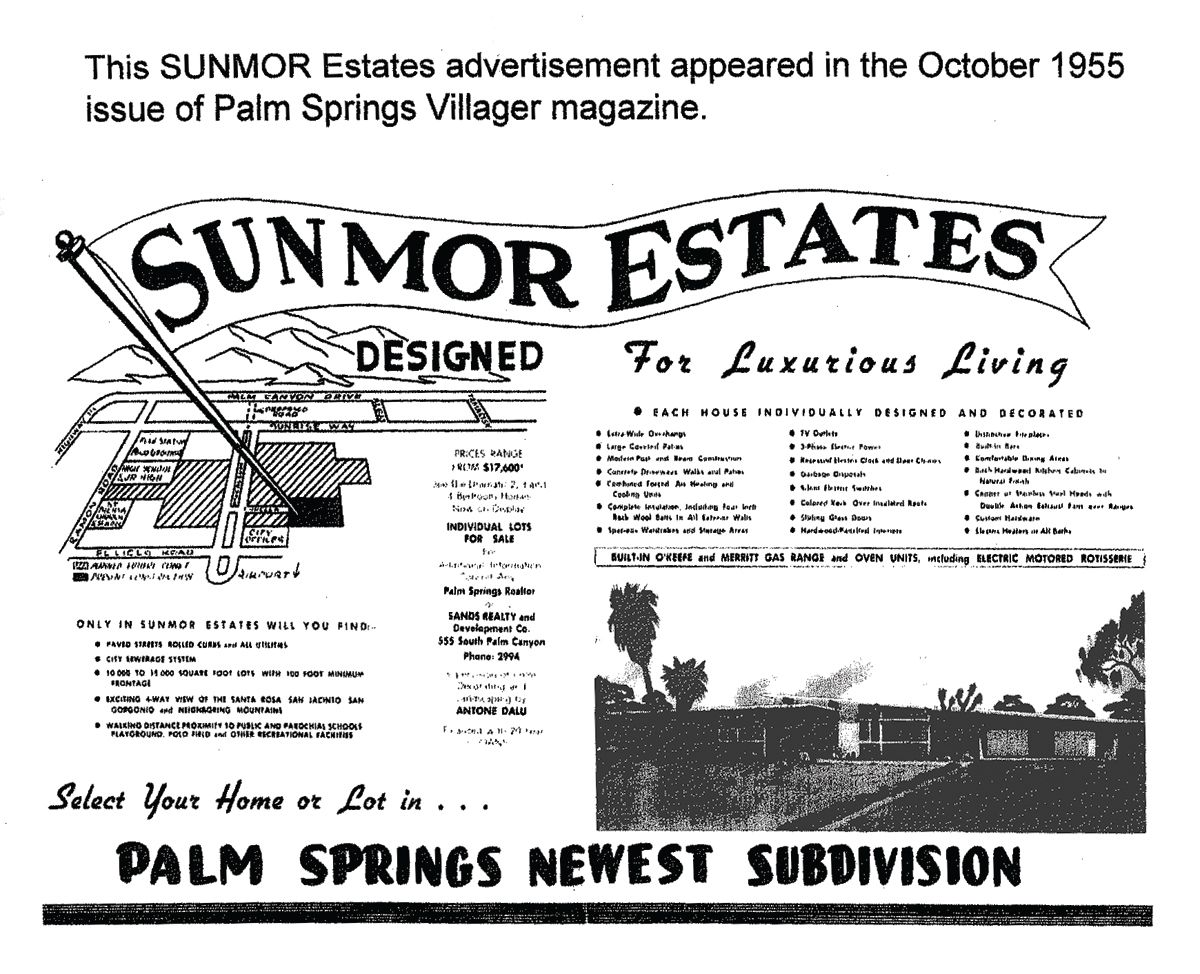
Discover Sunmor Estates: A Historic Mid-Century Modern Neighborhood in Palm Springs
Sunmor Estates is one of Palm Springs' most architecturally significant mid-century modern neighborhoods, offering a remarkable collection of homes designed during the city's postwar building boom. Located in central Palm Springs, Sunmor is known for its classic desert modernist architecture, quiet residential streets, mountain views, and fascinating connection to the development of modern Palm Springs.
Developed primarily between 1955 and 1959, the neighborhood features homes associated with renowned architects Donald Wexler, Richard Harrison, and William Krisel, along with the influential Alexander Construction Company.
For buyers searching for authentic mid-century modern homes in Palm Springs, Sunmor Estates offers an opportunity to own a piece of the city's architectural heritage while enjoying the conveniences of a centrally located neighborhood.
The History of Sunmor Estates
Sunmor Estates began taking shape in 1955 when developers A.R. Simon and Merrill Brown, through Sands Realty and Development Corporation, envisioned a modern residential community featuring affordable, architect-designed homes.
The original development was planned on a much larger scale, but only a portion of that vision was realized before the property was acquired by the Alexander Construction Company.
Local builder Robert "Bob" Higgins was responsible for the first homes in Sunmor Estates. Higgins was already respected for constructing important Palm Springs buildings, including the L'Horizon Hotel, designed by William Cody.
Working with the architectural firm of Wexler & Harrison, Higgins constructed eleven distinctive modernist homes. These early residences helped establish the architectural character that would define the neighborhood.
In 1957, George and Robert Alexander of the Alexander Construction Company acquired the remaining development property and began building additional homes in what was officially known as the Enchanted Homes tract.
Although the original Sunmor Estates and Enchanted Homes were separate developments, today they are generally recognized as part of the larger Sunmor neighborhood.
This combination of two important architectural collaborations makes Sunmor especially interesting to students, collectors, and enthusiasts of Palm Springs Desert Modernism.
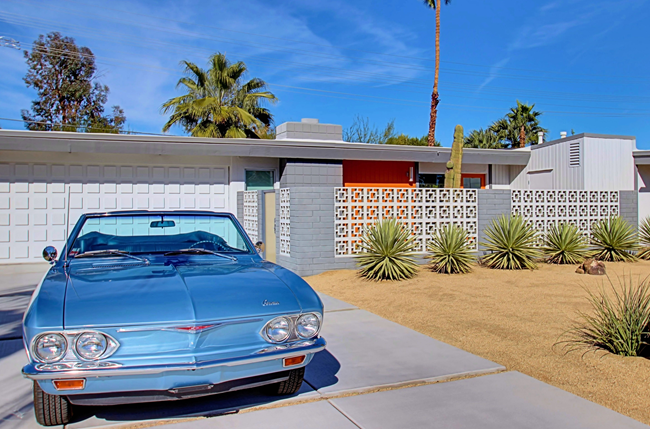
The Architecture of Sunmor Estates: Wexler, Harrison, Krisel and the Alexanders
Sunmor Estates is particularly notable because it showcases the work of two influential architectural teams whose designs helped shape the appearance of modern Palm Springs.
Donald Wexler and Richard Harrison: The Original Sunmor Homes
The first eleven homes in Sunmor Estates were designed by architects Donald Wexler and Richard Harrison and constructed by builder Bob Higgins beginning in 1955.
These residences embraced the principles of desert modernism, emphasizing simplicity, clean horizontal lines, functional floor plans, and a close relationship between indoor and outdoor spaces.
Architectural features associated with the original Sunmor homes include:
Post-and-beam construction with exposed structural elements
Broad roof overhangs that provide shade from the desert sun
Large expanses of glass and sliding glass doors
Covered patios that extend interior living spaces outdoors
Low-profile rooflines and horizontal architectural forms
Open living spaces designed for casual desert lifestyles
A thoughtful relationship between the home, its lot, and surrounding mountain views
These homes represent an early example of Wexler and Harrison's approach to residential architecture, combining practical construction methods with sophisticated modernist design.
The Alexander Construction Company and William Krisel
After acquiring the remaining development land, the Alexander Construction Company introduced additional modernist homes designed by William Krisel of the architectural firm Palmer & Krisel.
George and Robert Alexander were instrumental in transforming Palm Springs from a relatively small resort community into a destination celebrated for its modern residential architecture.
Their innovative approach combined efficient construction techniques with architect-designed floor plans, making modernist homes available to a broader market.
In Sunmor, the Alexander homes were associated with Krisel's Ramon Rise designs, which were also used in another Palm Springs development.
These residences incorporated several defining characteristics of Alexander architecture:
Open-concept living and dining areas
Post-and-beam structural systems
Clerestory windows that introduce natural light while maintaining privacy
Flat, butterfly, shed, and low-pitched rooflines
Extensive glazing connecting living spaces to patios and gardens
Decorative concrete block and masonry details
Carports and integrated outdoor living areas
The architectural variety found in Sunmor creates an appealing streetscape, with individual houses displaying different roof configurations, elevations, and orientations.
Unlike neighborhoods developed entirely by one architect or builder, Sunmor provides an opportunity to compare two important approaches to mid-century residential design within a relatively small area.
The Historic Sunmor Model Home
One of the neighborhood's most significant architectural landmarks is the original Sunmor Model Home at 2821 Livmor Avenue.
Designed by Wexler & Harrison and constructed by Bob Higgins in 1955, this residence was the first of the eleven original modernist homes built in Sunmor Estates.
The property provides an important example of the architectural experimentation that characterized Palm Springs during the mid-1950s.
Recognizing its historical and architectural significance, the City of Palm Springs designated the Sunmor Model Home a Class 1 Historic Resource in January 2020.
Its preservation helps tell the story of the neighborhood's earliest development and the influence of Wexler and Harrison on Palm Springs residential architecture.
A Surprising Connection to World War II
Long before Sunmor became a residential neighborhood, portions of the area were part of the Palm Springs Army Airfield during World War II.
The land was used for military aviation operations, including aircraft parking and tie-down areas.
Remarkably, remnants of this history are still visible in the neighborhood today.
Circular concrete aircraft tie-down pads remain in certain locations, serving as reminders of the area's military past.
This unusual combination of aviation history and mid-century modern architecture adds another layer to Sunmor's historical identity.
What It's Like to Live in Sunmor Estates
Sunmor offers a distinctive residential environment that combines mid-century architectural character with a convenient central Palm Springs location.
The neighborhood is generally bounded by Farrell Drive to the west, the airport and civic center area to the east, Tamarisk Road to the north, and Andreas Road to the south.
One of Sunmor's most appealing characteristics is its network of relatively short residential streets and cul-de-sacs.
These streets create a more intimate neighborhood atmosphere than the larger thoroughfares that surround the community.
Sunmor's mature landscaping, classic rooflines, and relatively low-profile homes contribute to its recognizable mid-century appearance.
Many properties feature private patios, swimming pools, desert landscaping, and views of the surrounding San Jacinto Mountains.
The neighborhood also benefits from an active neighborhood organization that promotes community involvement, preservation awareness, and neighborhood events.
Convenient Central Palm Springs Location
Sunmor provides convenient access to many of the amenities that make Palm Springs such a desirable place to live.
Downtown Palm Springs, with its restaurants, galleries, shops, museums, and entertainment venues, is a short drive away.
Residents are also conveniently located near grocery stores, medical services, parks, and everyday shopping.
Palm Springs International Airport is immediately east of the neighborhood, making it especially convenient for seasonal residents and frequent travelers.
However, buyers should also consider the neighborhood's airport proximity when evaluating individual properties. Aircraft noise and activity may be noticeable, and conditions can vary depending on a home's location and flight operations.
Similarly, homes closer to Farrell Drive or other major roads may experience more traffic noise than properties on interior streets.
For prospective buyers, visiting a property at different times of day can provide a better understanding of its surroundings.
How Sunmor Estates Compares to Other Alexander Neighborhoods
Palm Springs is home to several neighborhoods associated with the Alexander Construction Company, but each has its own architectural identity, history, and residential character.
Sunmor Estates is particularly interesting because its original development predates the Alexander Company's involvement and includes homes designed by Wexler & Harrison.
Sunmor Estates vs. Racquet Club Estates
Racquet Club Estates is one of Palm Springs' best-known Alexander neighborhoods, recognized for its concentration of William Krisel-designed homes, butterfly rooflines, and classic post-and-beam architecture.
Sunmor shares many of these characteristics but is smaller in scale and features the additional architectural influence of Wexler & Harrison.
Buyers interested in comparing multiple mid-century architectural styles may find Sunmor particularly appealing.
Sunmor Estates vs. Twin Palms
Twin Palms, located in south Palm Springs, was one of the Alexander Construction Company's earliest and most influential residential developments.
Designed by Palmer & Krisel, Twin Palms is known for its distinctive butterfly roofs, indoor-outdoor floor plans, and the two palm trees originally included with each home.
Sunmor offers a similar connection to early Alexander architecture but in a more centrally located setting, with a different streetscape and additional architectural history.
Sunmor Estates vs. Vista Las Palmas
Vista Las Palmas is known for larger Alexander residences, dramatic mountain backdrops, and a collection of distinctive architectural styles, including homes designed by William Krisel and Charles DuBois.
While Vista Las Palmas generally appeals to buyers seeking larger luxury homes and substantial architectural statements, Sunmor offers a somewhat different experience, emphasizing the character of smaller-scale mid-century residential development.
For buyers exploring Palm Springs architectural neighborhoods, understanding these differences can help identify the right combination of home design, location, lot size, and lifestyle.
Buying a Mid-Century Modern Home in Sunmor Estates
Purchasing a mid-century modern home involves considerations beyond those typically associated with newer construction.
Many Sunmor properties have undergone renovations over the decades, ranging from sensitive architectural restorations to substantial modifications.
Some retain a high percentage of their original design features, while others have been updated to accommodate contemporary lifestyles.
When evaluating a Sunmor home, buyers should consider several important factors.
Architectural Authenticity
Original architectural elements can contribute to a home's character and desirability.
Features worth examining include rooflines, exposed beams, clerestory windows, original masonry, decorative block, entry details, and the relationship between the interior and outdoor spaces.
However, architectural authenticity should not be determined by appearance alone. Historical records, original plans, permits, and other documentation may help establish a property's design and construction history.
Roofs and Mechanical Systems
Flat and low-slope roofs require careful evaluation, particularly when they have been modified or when older roofing materials remain in place.
Electrical systems, plumbing, HVAC equipment, insulation, and windows may also require examination.
A qualified home inspector familiar with mid-century construction can help identify potential maintenance and modernization needs.
Renovations and Preservation
Modernizing a mid-century property can improve comfort and energy efficiency, but renovations should be approached with an understanding of the original architectural design.
Replacing windows, altering rooflines, enclosing carports, or changing exterior materials can significantly affect a home's appearance and architectural integrity.
Buyers should also determine whether a property has individual historic designation or is subject to applicable preservation requirements before planning exterior alterations.
Location Within the Neighborhood
Not every Sunmor property has the same surroundings.
Lot orientation, views, privacy, street location, airport proximity, and neighboring properties can all influence how a home feels and functions.
Understanding these differences is an important part of making an informed purchase.
Selling a Home in Sunmor Estates
Selling an architecturally significant home requires a marketing strategy that communicates more than square footage, bedroom counts, and recent renovations.
For many buyers, the architectural story is a major part of the property's appeal.
A successful marketing presentation should highlight the home's history, design features, original architectural details, and relationship to the surrounding neighborhood.
Professional photography, thoughtful staging, accurate architectural descriptions, and targeted exposure to mid-century modern home enthusiasts can help communicate what makes a property distinctive.
Homes with documented architectural provenance or well-preserved original features may appeal to buyers specifically seeking authentic Palm Springs modernism.
However, not every mid-century home commands an architectural premium. Condition, location, renovations, lot characteristics, and comparable sales remain important factors in determining market value.
Frequently Asked Questions About Sunmor Estates
Where is Sunmor Estates located?
Sunmor Estates is located in central Palm Springs, California, generally between Farrell Drive and the Palm Springs International Airport area, with Tamarisk Road to the north and Andreas Road to the south.
Who built the homes in Sunmor Estates?
The original eleven homes were constructed by Robert "Bob" Higgins beginning in 1955. The Alexander Construction Company subsequently developed additional properties in the adjacent Enchanted Homes tract beginning in the late 1950s.
Who were the architects of Sunmor Estates?
The original Sunmor homes were designed by Donald Wexler and Richard Harrison. Additional homes built by the Alexander Construction Company were associated with architect William Krisel of Palmer & Krisel.
Are Sunmor Estates homes considered Alexander homes?
Many homes in the neighborhood were built by the Alexander Construction Company, but not all of them. The original Sunmor development included homes designed by Wexler & Harrison and constructed by Bob Higgins.
Are there historic homes in Sunmor Estates?
Yes. Sunmor contains architecturally and historically significant mid-century residences. The original Sunmor Model Home at 2821 Livmor Avenue received individual Class 1 Historic Resource designation in 2020. Historic surveys have also recognized the significance of the larger Sunmor Estates/Enchanted Homes area, although survey eligibility should not be confused with formal historic district designation.
Is Sunmor Estates close to downtown Palm Springs?
Yes. Sunmor is centrally located, providing convenient access to downtown Palm Springs restaurants, shopping, galleries, cultural attractions, and entertainment.
Is Sunmor Estates near the Palm Springs airport?
Yes. Palm Springs International Airport is located immediately east of the neighborhood. However flights don't necessarily fly over the neighborhood, but you may still hear some airport noise. Buyers should evaluate potential airport noise and activity at specific properties.
What makes Sunmor Estates different from other Palm Springs mid-century neighborhoods?
Sunmor is distinguished by its combination of Wexler & Harrison-designed homes, Alexander Construction Company residences, William Krisel architecture, and its unique connection to Palm Springs' World War II aviation history.
Are homes for sale in Sunmor Estates available year-round?
Homes may be listed throughout the year, although inventory can be limited because Sunmor is a relatively small, established neighborhood. Buyers interested in specific architectural styles or original features may benefit from monitoring new listings closely.
Explore Sunmor Estates Homes for Sale
Whether you're searching for an architecturally significant Wexler & Harrison home, a classic Alexander residence, or a thoughtfully renovated mid-century modern property, Sunmor Estates offers a distinctive opportunity to experience Palm Springs' architectural legacy.
At The Paul Kaplan Group, our team specializes in Palm Springs mid-century modern and architectural real estate.
With more than 25 years of experience in the Palm Springs market and a background in architecture, Paul Kaplan brings an informed perspective to helping buyers and sellers understand the design, history, and real estate considerations of these exceptional homes.
We can help you explore available Sunmor Estates properties, understand architectural differences, evaluate renovation considerations, and compare Sunmor with other Palm Springs neighborhoods.
Contact The Paul Kaplan Group to learn more about buying or selling a home in Sunmor Estates.
Phone: 760-459-1396
Website: https://www.paulkaplanhomes.com
Additional Palm Springs Architectural Resources
Explore more about Palm Springs' extraordinary architectural heritage:
Palm Springs Architectural Homes
The Alexander Construction Company's Legacy
Architects of Palm Springs Desert Modernism
Sunmor Neighborhood Organization
Palm Springs Preservation Foundation
Sunmor Model Home Historic Information


.jpg)
.jpg)
.jpg)
.jpg)
.jpg)
.jpg)