

.png)
.png)
The Evolution of Coachella

Paul Kaplan
I've made it a professional goal to be known as a leader in the real estate industry in the Palm Springs market for the past 25+ years...
I've made it a professional goal to be known as a leader in the real estate industry in the Palm Springs market for the past 25+ years...
Every spring, the desert transforms—and no one sees it quite like The Paul Kaplan Group. What was once a quiet stretch of polo fields in Indio becomes the global stage for the Coachella Valley Music and Arts Festival, drawing hundreds of thousands to the Coachella Valley. For those of us deeply rooted in Palm Springs real estate, Coachella isn’t just a music festival—it’s a powerful force that shapes lifestyle, demand, and the way people experience desert living. Today, it’s one of the most recognizable festivals in the world—but its beginnings were far from guaranteed.
The Early Days: A Risky Bet in the Desert (1999–2001)
The first Coachella took place in October 1999, created by Goldenvoice and its parent company AEG. At the time, hosting a massive multi-day music festival in the desert heat seemed questionable at best.
But the inaugural lineup was anything but small. Acts like Beck, Tool, and Rage Against the Machine helped draw a crowd of around 25,000 attendees per day.
Despite strong reviews, the festival actually lost money—and Coachella skipped 2000 entirely. It returned in 2001 as a scaled-down, single-day event, slowly rebuilding momentum.
Finding Its Footing (2002–2009)

By the early 2000s, Coachella began to define itself. It expanded back into a multi-day festival and introduced elements that would become iconic—camping, immersive art, and genre-blending lineups.
One of the most pivotal moments came in 2006 when Daft Punk performed their now-legendary pyramid set. Many still consider it one of the greatest live electronic performances ever—and a turning point that cemented Coachella as a tastemaker.
By the end of the decade, the festival had grown significantly in both attendance and cultural relevance.
The Rise to Global Dominance (2010–2019)
The 2010s were Coachella’s golden era of expansion.
The festival added a second weekend in 2012 to meet overwhelming demand—instantly doubling its reach. Social media also played a major role, turning Coachella into not just a music festival, but a global lifestyle brand.
Massive headliners became the norm:
- Beyoncé’s 2018 performance (“Beychella”) became a cultural milestone
- Prince (2008) delivered a legendary set that still gets talked about
- Kanye West redefined staging and spectacle
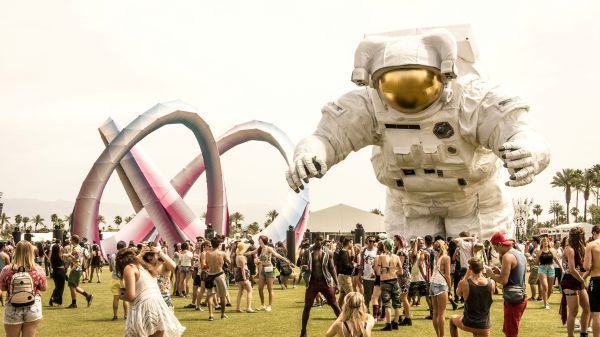
Meanwhile, art installations grew larger and more ambitious, blending music, architecture, and desert landscape into a fully immersive experience.
Reinvention and Resilience (2020–Present)
Like much of the live entertainment world, Coachella faced an unprecedented pause during the COVID-19 pandemic, canceling its 2020 event and delaying its return until 2022.
But when it came back, it came back strong.
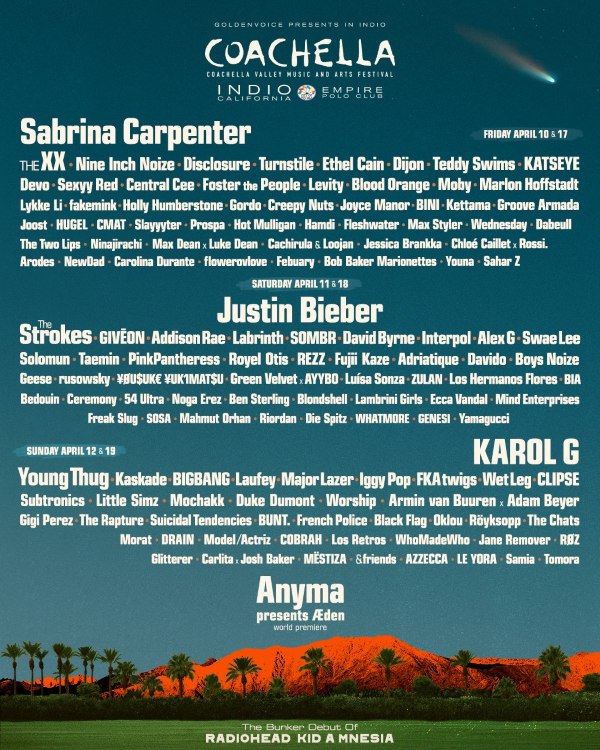
Recent years have showcased increasingly diverse and global lineups, with artists like Bad Bunny and BLACKPINK headlining—reflecting a broader shift in the global music landscape.
The festival continues to evolve, balancing its indie roots with mainstream appeal, and constantly redefining what a music festival can be.
The Economic Impact: A Boost to the Desert Economy
Beyond the music and spectacle, Coachella has become a major economic engine for the Coachella Valley. Each year, the festival draws more than 250,000 attendees across two weekends to cities like Indio, Palm Springs, and La Quinta—generating an estimated $700 million to $800 million in annual economic impact for the region. Hotels often sell out months in advance, restaurants operate at full capacity, and local businesses—from boutiques to ride services—see one of their busiest periods of the year.
For homeowners and real estate investors, Coachella season has become a key opportunity. Short-term rental demand surges dramatically, with some properties commanding two to three times their typical nightly rates during festival weekends. This spike has helped shape buying patterns across the valley, with many purchasers factoring in seasonal rental income as part of their ownership strategy. At the same time, the festival generates significant tax revenue and supports thousands of jobs in hospitality, event production, and transportation.
Of course, it’s not without trade-offs—traffic congestion, noise, and ongoing debates around short-term rental regulations are part of the conversation. Still, for most of the Coachella Valley, the festival remains a net positive—fueling local businesses, supporting property values, and reinforcing the desert’s reputation as a global destination.
More Than Music
At its core, Coachella is no longer just about the music.
It’s about:
- Art and large-scale installations
- Fashion and cultural influence
- Food, design, and experiential spaces
- And perhaps most importantly, the feeling of being part of something bigger
For the Coachella Valley, the festival has also become a major economic engine—bringing hundreds of thousands of visitors to the region each year and putting the desert firmly on the global cultural map.
A Desert Legacy Still Being Written
What started as a risky experiment has become an institution.
And like the desert itself, Coachella continues to shift, adapt, and surprise—year after year.
Selling Your Home?
Get your home's value - our custom reports include accurate and up to date information.