

.png)
.png)
Palm Springs: God's Waiting Room?

Paul Kaplan
I've made it a professional goal to be known as a leader in the real estate industry in the Palm Springs market for the past 25+ years...
I've made it a professional goal to be known as a leader in the real estate industry in the Palm Springs market for the past 25+ years...
Lost Palm Springs: God’s Waiting Room, or Just the Party That Never Ended?
Palm Springs has collected nicknames the way it has collected swimming pools—enthusiastically and with very little intention of giving them back. Playground of the Stars. Midcentury Mecca. That place your aunt moved after discovering elastic waistbands and a firm commitment to happy hour.
But none has clung quite so stubbornly, or inaccurately, as “God’s Waiting Room.”
If you grew up watching late-night television in the 1960s or ’70s, you probably heard the phrase used by old-school comedians and residents to describe the city’s large population of retirees and elderly celebrities. Notably, comedian Red Skelton called it “the home of the newlywed and nearly dead,” As noted in a Vanity Fair article from 1999:
"This is God’s waiting room,” says Frank Bogert, the 89-year-old former mayor of Palm Springs, who rides his horse two hours nearly every day in the Indian Canyons south of town. “The average age,” says novelist Sidney Sheldon, 82, “is deceased.” A recent arrival notes, “All the people I thought had died are alive and kicking in Palm Springs. Time sort of stands still here.”
Ok- There may be a little bit of truth to this; we used to play a game over cocktails, called, "Dead, or Living in Palm Springs!"
It was a good joke. Efficient. Portable. It required no explanation and fit neatly into a punchline.
It also didn’t really hold up—especially after dark.
Because even during the era when the nickname supposedly made sense, Palm Springs was doing the exact opposite of waiting.
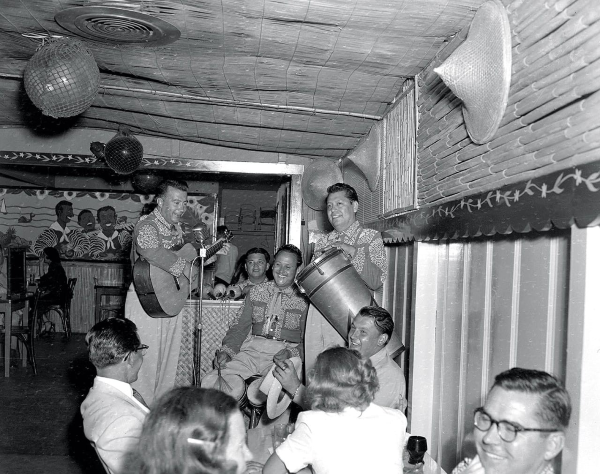
The Doll House - Palm Springs Life Archives, Featured 1999
A Waiting Room with a Bar (and a Dance Floor)
The problem with the nickname becomes obvious the moment you look at Palm Springs in its so-called heyday of the 1950s and ’60s. This was not a town winding down. This was a town warming up.
Cocktail hour wasn’t an option; it was a civic responsibility. Drinks started at home, then migrated into town—often to places like Chi Chi, where martinis were poured with confidence and restraint was politely declined. From there, the night might drift to The Doll House, where dancing went late and the audience was as much a spectacle as the performers.
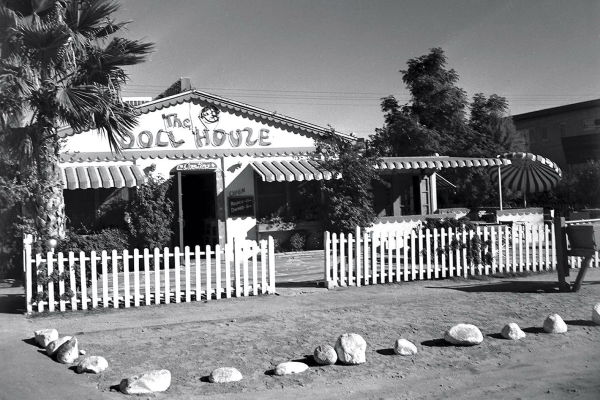
The Doll House - Palm Springs Life Archives, Featured 1999
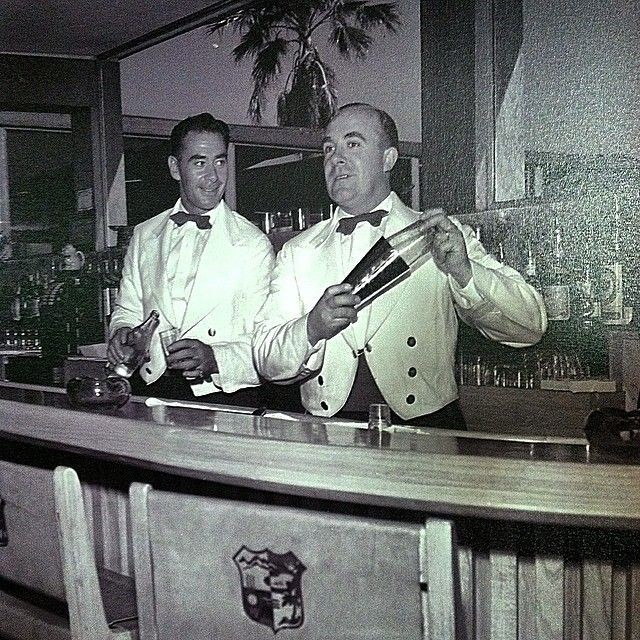
Dinner was rarely the finale. It was an intermission. You ate quickly so you could get back to it—whether that meant another round at The Purple Room, where you might catch the Rat Pack singing late into the early morning hours, a lounge at the Riviera, or an after-party that no one could quite explain but everyone instinctively understood, "what goes on in Palm Springs, stays in Palm Springs."
Staying out all night wasn’t rebellious; it was routine. Watching the sunrise wasn’t poetic; it was logistical.
Hollywood royalty didn’t come to Palm Springs to nap. They came to drink too much, dance too long, flirt recklessly, and misbehave discreetly before resurfacing poolside the next afternoon, sunglasses firmly in place, pretending nothing had happened—which, of course, was the entire point.
If this was a waiting room, it was the loudest, drunkest, best-dressed waiting room imaginable.
Forty Is a Baby Here
When I first moved to Palm Springs, I went out to dinner with a group of new friends—one of those desert evenings where no one rushes and everyone orders martinis.
At some point, someone asked how old I was.
“Forty…” I said, trailing off politely, the way one does when announcing a number that may require emotional reassurance.
The table went silent.
Then—actual, audible gasps.
“You’re just a baby!” someone said.
This was confusing, because I had just arrived from Los Angeles, where turning forty is treated less like a birthday and more like a memorial service. In L.A., forty is when casting directors stop calling back, brunch conversations pivot to joint pain, and people begin speaking to you in a tone normally reserved for rescued animals.
Palm Springs, on the other hand, looked at forty and said, Relax. You’re early.
I leaned into it. Hard. I became that person—the one who casually mentions, often and without provocation, that fifty is still considered “chicken” here.
(You may need to be part of the LGBTQ+ community to fully understand that sentence. If you don’t, just know it’s both affectionate and deeply judgmental.)
Waiting rooms do not gasp when you say you’re forty. Waiting rooms do not make fifty sound aspirational.
Palm Springs does.
What the Joke Always Missed
While the punchline circulated, so did artists, architects, writers, closeted movie stars, and people who had absolutely no interest in going quietly into anything.
Palm Springs has always lived comfortably in contradiction: afternoon naps followed by very late nights. Shuffleboard courts a few blocks from experimental architecture. People asleep by 8 p.m. and people just getting dressed.
It was also a place where LGBTQ+ communities built lives (and also partied)—sometimes discreetly, sometimes defiantly—long before many major cities caught up. A town where reinvention wasn’t just allowed; it was encouraged.
The nickname flattened all of that into something passive and polite. It worked because it was simple. It just wasn’t true.
The Lost Truth
Here’s the part that feels most Lost Palm Springs: the idea that the nickname ever really fit.
Palm Springs wasn’t God’s Waiting Room. Not when the cocktails were flowing, the bands were playing, people were dancing, and the night regularly stretched into morning. Not when people came here to rearrange their lives rather than retire from them.
This city has always had a different relationship with time. Dinner doesn’t signal the end of the evening. Age doesn’t signal retreat. And retirement—when it happens—is less about slowing down than changing the schedule.
Fast-Forward to Now (Still Not Waiting)
Fast-forward to today and the whole “God’s Waiting Room” idea collapses completely, like a folding chair at a pool party that was already a bad idea. Millennials—and a healthy number of younger people who appear to have unlimited energy and no visible hangovers—have rediscovered Palm Springs and decided the volume knob was merely decorative.
The party didn’t go away. It just upgraded its guest list and got louder.
Now we have things like Coachella Music Festival, which turns the desert into a glitter-covered migration of flower crowns, rented houses, and people confidently wearing outfits that should not be legal before noon. There’s the White Party, where the concept of “rest” is treated as a rumor. And then there’s the opening night of the Palm Springs International Film Festival, which somehow manages to combine glamour, awkward small talk, and very expensive cocktails in a way that feels deeply Palm Springs. And of course Modernism Week soirees that try to mimic the lively nightlife of a bygone era. And don't forget the endless parade of bridesmaids parties invading our bars every weekend too!
And the pool parties. We should talk about the pool parties.
These are not the polite, sunscreen-and-sandwiches gatherings of retirement brochure lore. These are scandalous, sun-drenched affairs where music thumps, clothes become optional earlier than expected, and you find yourself thinking, I did not emotionally prepare for this before coffee. The kind of parties where someone inevitably asks, “Do you know whose house this is?” and the answer is always no—but everyone agrees it’s best not to find out.

Between parties, people are astonishingly active. Golfing, pickleballing with competitive fervor, biking the new CV Link routes, hiking, swimming, socializing—often all in the same day. Yes, people still retire here. That part is true. But these are some of the most active 55+ communities in the country, populated by people who schedule their days with the confidence of cruise directors and the stamina of caffeinated camp counselors.
In my experience, no one here is waiting around for life to end.
They’re too busy living it—staying up too late, waking up too early, planning the next gathering, the next ride, the next party. Which is, frankly, the exact opposite of a waiting room.
If this place were truly God’s Waiting Room, someone forgot to turn down the music, drain the pools, and tell everyone to go home.
And thank goodness for that.
Waiting rooms are quiet.
Palm Springs always had music playing somewhere—sometimes faint, sometimes loud, occasionally unforgettable. And if you stayed out long enough, you didn’t hear God calling.
You watched the sun come up instead.
That’s the Palm Springs we risk forgetting.
And that’s exactly why it belongs in Lost Palm Springs.
Selling Your Home?
Get your home's value - our custom reports include accurate and up to date information.