

.png)
.png)
Louise's Pantry - a downtown Palm Springs Institution

Paul Kaplan
I've made it a professional goal to be known as a leader in the real estate industry in the Palm Springs market for the past 25+ years...
I've made it a professional goal to be known as a leader in the real estate industry in the Palm Springs market for the past 25+ years...
Coffee, Pie, and a Line Down Palm Canyon: Louise’s Pantry Remembered
Yellow booths, a bakery below, and a front-row seat to downtown life
Before Palm Springs became synonymous with destination dining and curated experiences, there were places like Louise’s Pantry—warm, familiar, and wonderfully unpretentious. So popular that a steady line often formed outside its doors, Louise’s wasn’t just a restaurant you happened upon; it was one you willingly waited for. For decades, Louise’s Pantry was more than just a place to eat along Palm Canyon Drive. It was a ritual, a meeting place, and for many, a memory etched in smell, color, and sound—coffee brewing, pastries rising from the cellar bakery below, and the hum of conversation filling the yellow-walled room.
In mid-century America, diners like Louise’s Pantry were social anchors, and its constant line of patrons reflected just how deeply this kind of everyday gathering place mattered to the culture of the time.
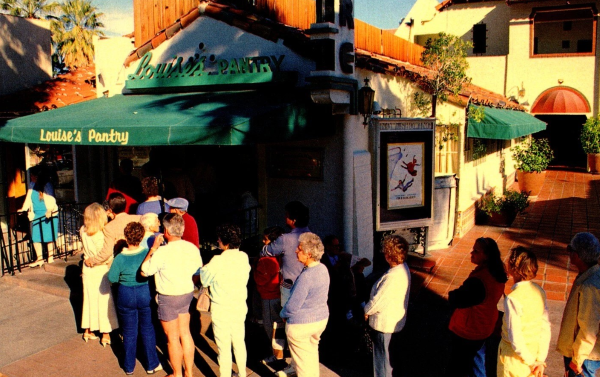 Louise’s Pantry, Palm Springs, patrons waiting in line, c. late 1970s–early 1980s.
This post is part of Lost Palm Springs by The Paul Kaplan Group, a personal history project rooted in memory. Paul has been coming to Palm Springs since the 1960s with his family and wanted to document the places he remembers—especially the ones that quietly disappeared before anyone thought to preserve them.
Who Opened Louise’s Pantry — and When?
Like many beloved, everyday establishments in mid-century Palm Springs, Louise’s Pantry has left behind more memories than paperwork. What is clear is that Louise’s Pantry was operating by the early 1950s, during a period when downtown Palm Springs was rapidly evolving from a small desert town into a thriving resort destination.
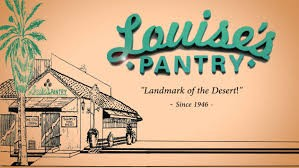
The restaurant was founded by a woman named Louise—widely remembered by first name only—at a time when female-owned and operated eateries were far less common than they are today. While definitive records identifying her full name have proven elusive, longtime locals recall Louise as a hands-on proprietor, closely involved in the day-to-day life of the restaurant. This personal connection likely helped shape the warm, welcoming atmosphere that made the Pantry such a success.
From the beginning, Louise’s Pantry distinguished itself not only as a diner but also as a bakery-driven café, with pastries and cakes baked on-site in a cellar kitchen below street level—an uncommon feature that quickly became part of its identity. The combination of fresh-baked goods, generous portions, and approachable prices helped the restaurant build a loyal following almost immediately.
By the mid-1950s and into the 1960s, Louise’s Pantry was firmly established as one of downtown Palm Springs’ most popular eateries, often drawing steady lines of locals and visitors waiting patiently along Palm Canyon Drive. Its proximity to the Plaza Theatre only added to its visibility and popularity, cementing its role as part of a lively downtown rhythm.
A Bakery Below, Anticipation Above
One of the most unforgettable aspects of Louise’s Pantry wasn’t just what you ordered—it was what you saw while waiting. As customers lined up, they could peer down toward the cellar bakery, where cakes and pastries were baked below street level. Trays of freshly made desserts would come up from downstairs, lifted into view like small revelations: frosted cakes, pies, and pastries still warm from the oven.
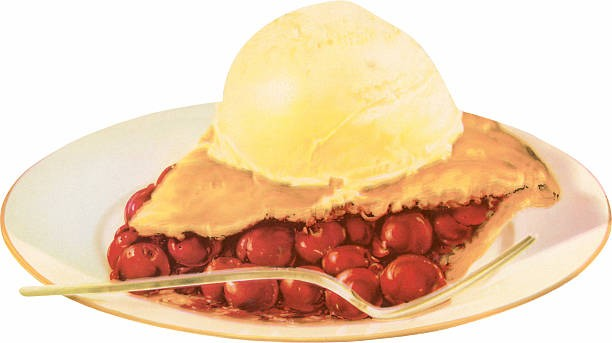
The scent alone could make ordering breakfast feel like a formality. You already knew dessert was happening.
That visible connection between kitchen, bakery, and customer created a sense of theater—quiet, everyday theater—that stayed with people long after the meal ended.
Yellow Walls, Vinyl Booths, and Desert Light
Step inside Louise’s Pantry and you were greeted by interiors that felt instantly cheerful and grounded. Yellow walls reflected the desert light, making the space feel sunny even before your coffee arrived. Vinyl booths—durable, comfortable, and perfectly of their time—lined the room, holding generations of conversations.
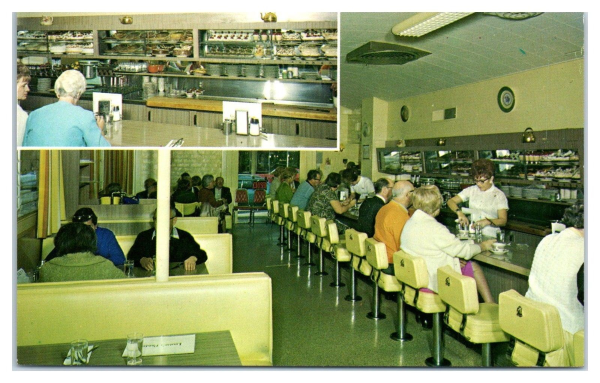
Louise’s Pantry interior, Palm Springs, c. 1960s. Vintage color postcard,
likely photographed by Lou Sawyer / Lou Sawyer Photographics.
This wasn’t mid-century modern in the architectural showcase sense. It was mid-century living: practical, optimistic, and designed for use. Louise’s didn’t try to be stylish; it simply was, and in doing so became timeless.
Comfort Food With a Sense of Place
The menu was classic diner fare—breakfasts served all day, hearty lunches, dependable favorites—paired with those irresistible baked goods that tempted nearly everyone into ordering “just one more thing.” Louise’s Pantry struck a balance Palm Springs once did so well: casual enough for locals, charming enough for visitors.
In a town known for glamour and escape, Louise’s offered something equally valuable—belonging.
Right Place, Right Time
Louise’s Pantry occupied a prime location on Palm Canyon Drive, nestled into the heart of downtown and notably adjacent to the Plaza Theatre. This positioning mattered. Louise’s wasn’t a destination you drove out of your way for—it was part of a sequence. Breakfast at Louise’s, a stroll along the strip, maybe a matinee or evening show next door. The flow felt effortless.
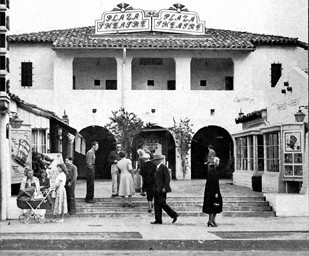
Plaza Theatre, Palm Springs, c. late 1930s. Photo courtesy of the Palm Springs Historical Society,
via Calisphere (University of California Libraries).
Being so close to the theatre meant Louise’s Pantry naturally became a gathering spot. People stopped in before performances, lingered after shows, or filled the booths during intermissions of daily life. The diner fed off the energy of the street—and added to it.
Modest Architecture, Big Presence
Architecturally, Louise’s Pantry didn’t compete with the grand gestures of nearby hotels or theaters. Its strength was in its simplicity. Large street-facing windows connected the interior to Palm Canyon Drive, allowing passersby to see the yellow interiors and vinyl booths inside—and for diners to watch downtown life unfold.
While Louise's Pantry occupied a Spanish Revival-style building that complemented the neighboring Plaza Theatre and La Plaza a few doors down the street, its interiors conveyed a distinct mid-century look and feel.
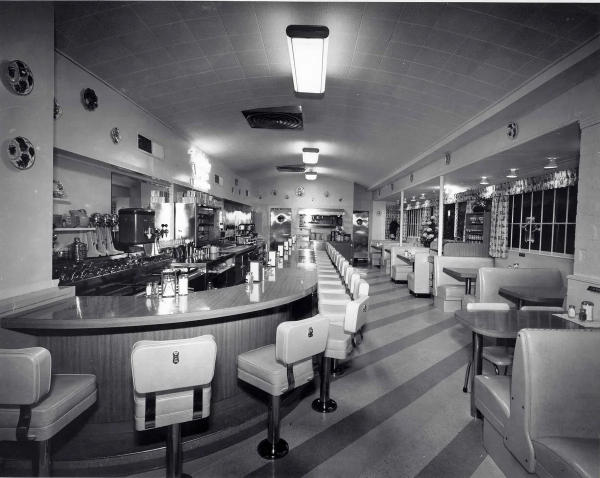
Vintage photograph of a mid-century American diner interior, circa 1940s–1950s.
Source: Library of Congress / public archival collections.
The Theatre Next Door
Next door, the Plaza Theatre anchored the block with marquee lights and cultural cachet. Together, the theater and Louise’s Pantry created a rhythm: entertainment and everyday life sharing the same sidewalk.
While Louise’s Pantry is no longer here, the recent restoration of the Plaza Theatre has brought renewed energy back to this part of downtown. Its revival feels like a quiet echo of what once existed—a reminder of when Palm Canyon Drive buzzed from morning coffee through curtain call.
A Living Streetscape, Remembered
In its heyday, this stretch of downtown Palm Springs felt layered and alive. Diners, shoppers, theatergoers, tourists, and locals all crossed paths. Louise’s Pantry was never flashy, but it was essential—a place that stitched the neighborhood together.
Today, standing near the restored Plaza Theatre, it’s easy to imagine the scene from decades past: people spilling out onto the sidewalk, the hum of conversation, and the smell of coffee and fresh pastries drifting from Louise’s Pantry next door.
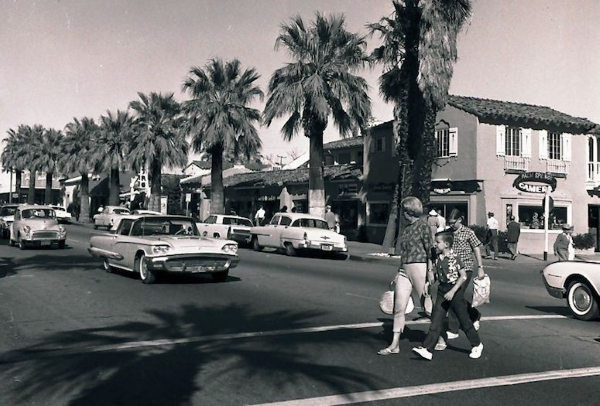
Downtown Palm Springs, Palm Canyon Drive, circa late 1950s–early 1960s
Courtesy of the Palm Springs Historical Society, via Calisphere / University of California Libraries
Why This Memory Matters
Lost Palm Springs isn’t just about buildings that vanished—it’s about how places worked together to create a sense of life and continuity. Louise’s Pantry, the Plaza Theatre, and Palm Canyon Drive formed a vibrant ecosystem long before downtown revitalization became a strategy.
Though Louise’s is gone, the rebirth of the Plaza Theatre offers hope. It reminds us that downtown Palm Springs can once again feel layered, social, and alive—much like it did when yellow booths, vinyl seats, and cakes rising from a cellar bakery were part of the daily scene.
Sources & Invitation
This article is part of the Lost Palm Springs series by The Paul Kaplan Group, drawing from personal memories, vintage postcards, and oral history. Many everyday businesses like Louise’s Pantry existed long before the digital era, leaving behind limited formal documentation.
If you have photos, stories, or memories of Louise’s Pantry—or this stretch of Palm Canyon Drive—we invite you to share them and help preserve the texture of Palm Springs as it once was.
Selling Your Home?
Get your home's value - our custom reports include accurate and up to date information.