

.png)
.png)
Choosing Where to Live in the Coachella Valley

Paul Kaplan
I've made it a professional goal to be known as a leader in the real estate industry in the Palm Springs market for the past 25+ years...
I've made it a professional goal to be known as a leader in the real estate industry in the Palm Springs market for the past 25+ years...
Where Should You Live in the Coachella Valley? Start With Your Daily Life, Not the City Name
One of the most common questions I hear in real estate is some version of, “Where should I live in the desert?” Palm Springs? Rancho Mirage? Palm Desert? La Quinta? Cathedral City? Indio? Then comes the second round: condo or house? Golf course community? Gated community? Resort-style development? Downtown? Something quieter?
These are all fair questions. But I think we sometimes start in the wrong place. We focus on city names, square footage, number of bedrooms, lot size, HOA fees, and whether the kitchen has been remodeled. All important, of course. But those things don’t always tell you what your actual life is going to feel like once you move in.
And that, to me, is the bigger question: what does a normal Tuesday look like from this address?
Because eventually the vacation feeling wears off. You’re not “living in Palm Springs” every day in some abstract sense. You’re getting coffee, buying groceries, walking the dog, meeting a friend, going to the gym, driving to dinner, and sitting outside at 5:30 because the weather is perfect. That daily life is what you’re really choosing.
1. The 10-minute radius matters more than the city you live in
People get very attached to city names. “I want Palm Springs.” “I only want Rancho Mirage.” “I think I’m more of a La Quinta person.” And sometimes that instinct is right. Different cities in the Coachella Valley do have different personalities, and there are plenty of good reasons to prefer one over another.
But I would still look much more closely at what exists within about 10 minutes of the actual home, because that little radius becomes your world surprisingly fast. Where do you buy groceries? Where do you get coffee? Where do you walk? Where is your gym? Where are the restaurants you’ll actually use? Where is your doctor? Where do your friends live? Where will you take the dog when it finally drops below 90 degrees?
That little radius shapes your life much more than the city name on your mailing address. You can live in Palm Springs and still feel disconnected if you’re constantly driving 20 minutes to do everything you enjoy. You can live in Cathedral City, Rancho Mirage, or Palm Desert and have half your favorite places practically around the corner. Same with La Quinta. There’s a huge difference between living near Old Town, living inside a golf community, and living farther east, where you may get considerably more house for the money but spend more time in the car.
The same city can provide completely different lifestyles depending on the neighborhood. So when I’m looking at a property, I think we should zoom in before we zoom out. Forget the city for a minute and ask what actually happens within 10 minutes of the front door.
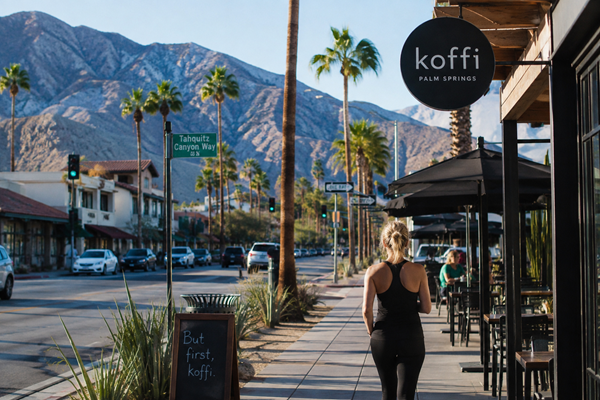
2. More space can give you a smaller life
I know. This one sounds backwards. And trust me, I still tend to do this myself. You walk into a bigger house and immediately start imagining all the reasons you need the extra room. A guest room, an office, a TV room, a bigger kitchen, a bigger yard, and more storage. Another bedroom because apparently everyone needs an emergency bedroom.
In the desert, you can often get substantially more space by moving farther from the most walkable or activity-heavy parts of the valley, and that can be great. Sometimes you genuinely want the larger lot, the private pool, the extra bedroom, or the three-car garage. But there is a tradeoff, and I don’t think we talk about it enough.
Sometimes the bigger house means you live a more isolated life. House, garage, car, grocery store, car, house. Dinner requires a drive. Coffee requires a drive. Seeing friends requires a drive. Even taking a walk can start to feel like an organized activity instead of something you simply do because there’s somewhere pleasant to walk to.
Meanwhile, someone living in a smaller condo near downtown Palm Springs might walk to coffee, see people along the way, stop somewhere for lunch, go to a neighborhood restaurant, and walk home. The home is smaller, but the daily life may actually feel bigger. The same thing happens elsewhere in the valley. A smaller place near El Paseo in Palm Desert might put restaurants and shops into your everyday orbit. A condo near Old Town La Quinta can create a completely different routine than a larger house several miles away. And a resort community with pools, fitness facilities, walking paths, and social activity might make a 1,400-square-foot condo feel surprisingly expansive because the community itself becomes part of your living space.
I’m not arguing against bigger houses. I like space. I like yards. I like having a door I can close. But square footage is only one kind of space. There’s also the space outside your front door, and sometimes that matters more.
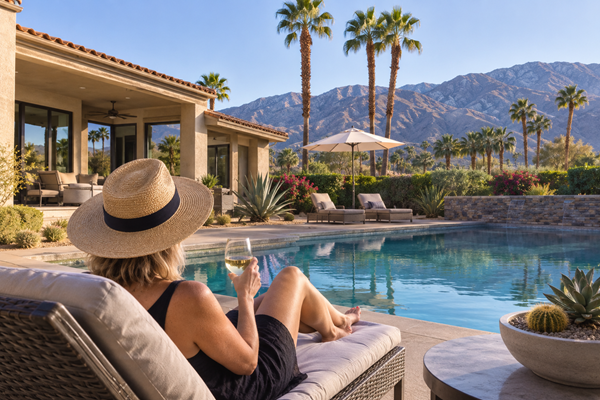
3. The best neighborhood amenity might just be other people outside.
We talk a lot about amenities in desert real estate: clubhouses, pools, fitness centers, tennis, pickleball, golf, walking trails and community rooms. All useful. But one amenity gets almost no attention on a listing sheet, and I think it can matter more than half of those things: other people being outside.
Idk why, but I notice this immediately when I’m in a neighborhood. Are people walking dogs? Are neighbors talking in the driveway? Are people sitting on patios? Do you see someone riding a bike? Are people actually using the pool? Does the neighborhood look lived in, or does it feel like every resident drives into the garage, closes the door, and disappears? There are some communities where I have shown properties, where even in the height of season, I never see residents using the community pool. And by contrast, there are other communities where it looks like there's a daily pool party going on!
There’s a huge difference. This can be especially noticeable in the desert because so many communities are designed around privacy. Walls, gates, private courtyards, private pools, and three-car garages. Which can all be wonderful, especially if privacy is exactly what you want. But sometimes we design out the casual human contact that makes a place feel like a neighborhood.
That’s one reason condos, older neighborhoods, and certain resort communities can be surprisingly social. People cross paths. You see the same dog walkers. You recognize the person at the pool. You end up talking with someone while getting the mail. None of that sounds terribly important on a property listing, but over time it creates familiarity, and familiarity creates belonging.
A fancy residents’ lounge doesn’t necessarily do that. People do. So if you’re touring a community, pay attention to whether you actually see any.
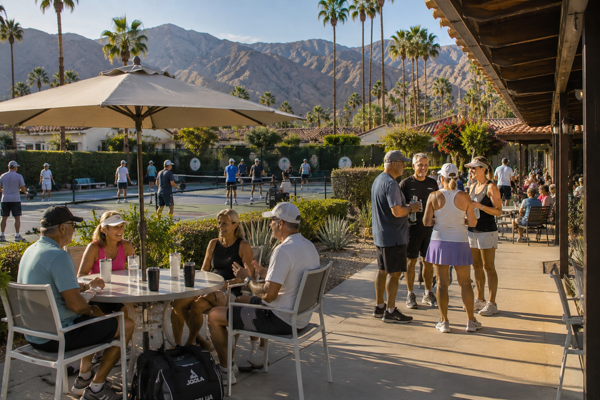
4. Moving somewhere new changes you, but not how you expect.
There is this fantasy when people move to the desert that everything is about to change. New house, new city, new lifestyle. Suddenly you’re going to hike every morning, eat outside every night, swim every afternoon, and become the person who attends every art opening and farmers market.
Then you move here and discover you’re still you. Same habits, same excuses, same streaming subscriptions.
A new city doesn’t magically turn you into another person, but your surroundings do change you in quieter ways. If there’s a beautiful walking route outside your door, you may start walking more. If you can walk to coffee, you may stop getting in the car for every little thing. If your community has a pool 100 feet away, you may actually use it. If you live close to downtown, you may decide to go out for dinner on a random Wednesday because it feels easy. If the San Jacinto Mountains are right outside your window every morning, you notice the landscape differently. If everyone in your neighborhood sits outside in the winter, eventually you probably will too.
That’s how a place changes you. Not dramatically and probably not overnight. Your environment changes what feels convenient, convenience changes your habits, and eventually those habits become your lifestyle.
So instead of asking, “Who am I going to become when I move to the desert?” I think the better question is, “What does this location make easier for me to do?” Because whatever is easiest tends to become normal.

5. Where your friends live should influence your choice more than it does.
This is one people really underestimate. We will spend weeks comparing neighborhoods, property taxes, HOA fees, renovation costs, price per square foot, and whether one community has pickleball and another has tennis. Then somewhere near the end of the conversation someone casually says, “Oh, most of our friends live in Palm Springs.” Or Rancho Mirage. Or Palm Desert.
And somehow that gets treated as secondary information.
I don’t think it should.
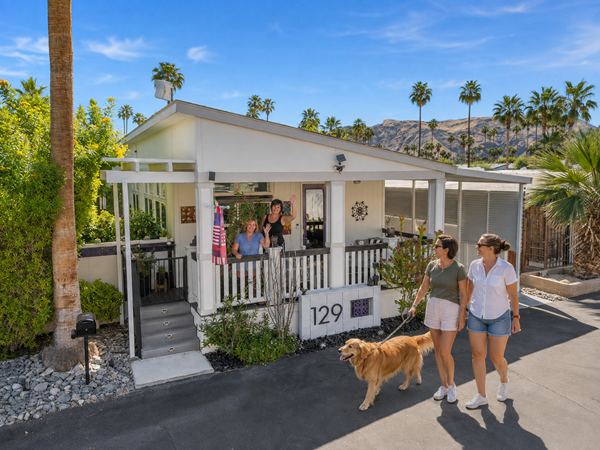
Relationships are a huge part of quality of life, and distance changes relationships more than we like to admit. A friend who lives eight minutes away is someone you might call at 4:30 and say, “Want to grab dinner?” A friend who lives 40 minutes away becomes somebody you need to schedule. That doesn’t sound like a big difference, but over the course of a year it can be.
The Coachella Valley is not enormous, but it is long. Living in Palm Springs when most of your social life is in La Quinta is very different from living five minutes away. Same in reverse. And as much as we all tell ourselves, “It’s only 25 minutes,” those 25 minutes have a funny way of affecting how often you actually see people.
This becomes even more important if you’re moving here from somewhere else. If you already know people in the valley, take their location seriously. If you don’t, think about where you are most likely to build community. Maybe that’s a condo complex with active residents. Maybe it’s a golf community. Maybe it’s a 55+ development. Maybe it’s an older central Palm Springs neighborhood where people are always walking.
There isn’t one right answer. But there probably is a better answer for the kind of social life you want.
So which city? Which kind of home?
This is where I think the usual real estate search gets a little backwards. Instead of beginning with, “I need 2,000 square feet, three bedrooms, and a pool,” maybe begin with a different question: how do I want my ordinary week to feel?
Do I want to walk somewhere every day? Do I want neighbors around, or do I really want privacy? Do I want a yard I can garden in? Do I actually want my own pool, or would I rather let the HOA maintain one? Do I want golf outside my back door even if I never play? Do I want restaurants nearby? Do I want to lock the door and travel for three months without thinking about the house? Do I want to know my neighbors? Do I want quiet? Do I want activity? Do I want my friends five minutes away?
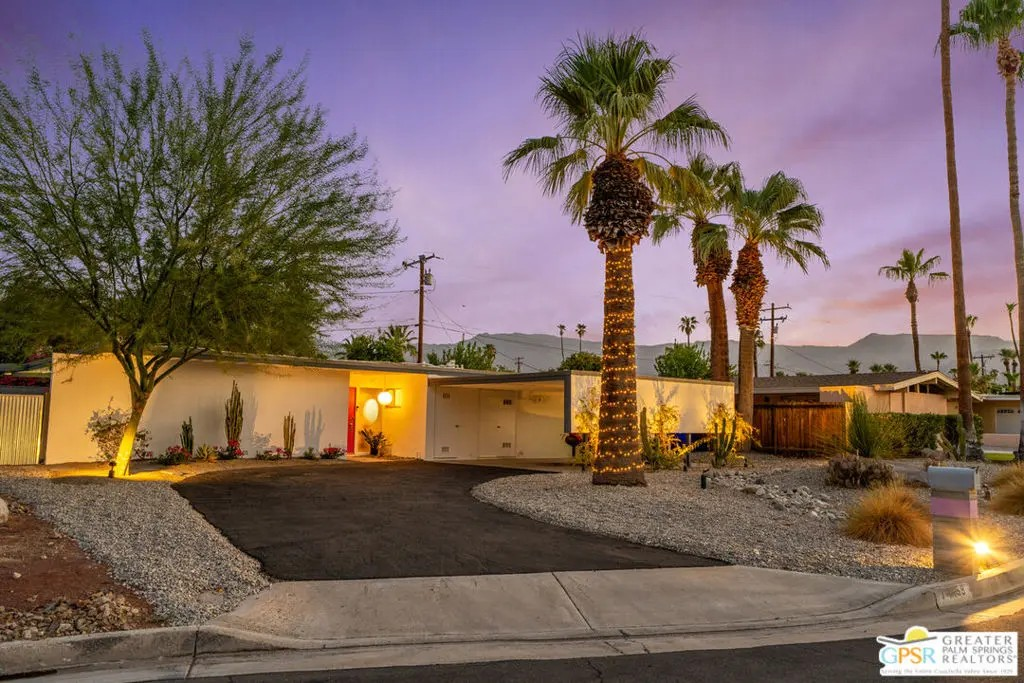
Those answers may lead you to a downtown Palm Springs condo, a mid-century house, a golf course home in Rancho Mirage, a resort community in Palm Desert, a smaller lock-and-leave property in La Quinta, or somewhere you barely considered because the city name wasn’t originally on your list. And that’s kind of the point.
The “best” place to live in the Coachella Valley isn’t really a city. It’s the place where the life immediately surrounding your home matches the life you actually want to live.
So yes, look at the kitchen. Look at the bedrooms, the price, and the HOA. But before you decide, stand outside for a few minutes and look around. Where would you walk? Where would you get coffee? Who would you see? How much would you drive? What would you do here on a completely ordinary Tuesday?
Because eventually most days are ordinary Tuesdays. And if you like your ordinary Tuesday, you probably picked the right place.
And if you're trying to figure out which part of the Coachella Valley actually fits you, that's where experience really matters. After 25 years of helping people buy and sell homes throughout the desert communities, The Paul Kaplan Group has learned that real estate agents sometimes end up acting a little like therapists. We're not only helping you manage the emotions, stress, excitement, and second-guessing that can come with buying a home. We're also helping you sort through what you think you want, what you actually need, and what is most likely to make you happy once the moving boxes are gone.
You may come to us convinced you need a 4,000-square-foot house on half an acre with a private pool. And maybe that's exactly right for you. But after talking through how you really spend your time, where your friends live, whether you actually want to maintain that much house and yard, and what you'd like your everyday life to look like, you might discover you'd be happier in a downtown Palm Springs condo where you can walk to great coffee shops and restaurants, lock the door when you travel, and let someone else worry about the community pool. Or you might start out wanting a condo and realize what you really need is a backyard, some privacy, and room to garden. That's the part that doesn't always show up in an online home search.
That's what we're here for. With 25 years of experience in Palm Springs and the surrounding Coachella Valley communities, we've seen just about every version of this decision. We know the neighborhoods, the condo communities, the golf developments, the 55+ communities, and the subtle differences between one part of the valley and another that can dramatically affect how you actually live. Our job isn't to convince you to buy the biggest house or the most expensive one. It's to ask the right questions, help you think through the tradeoffs, and hopefully get you to the place where you can say, "Yeah, this actually feels like me."
Because finding the right home starts with figuring out what the right life looks like for you.
"Where to live" Questions
Before you get too focused on square footage, finishes, or even the city name, ask yourself a few questions about the life you’ll actually be living there:
1. What do I want within 10 minutes of my front door?
2. How often do I realistically want to drive?
3. Do I want to be able to walk to coffee, restaurants, parks, or shops?
4. How important is it to see people out and about in my neighborhood?
5. Do I want an active social community or more privacy? 6. Would I rather have a larger home or a more convenient location?
7. Do I really want my own pool, yard, and maintenance, or would shared amenities work better for me?
8. How close do I want to be to friends and family?
9. Where are the doctors, services, and errands I use regularly?
10. What will my daily routine look like in summer as well as winter?
11. Do I want a neighborhood where I can easily meet people, or am I happier keeping to myself?
12. How important are things like golf, hiking, pickleball, a clubhouse, or a fitness center to my actual lifestyle, not the lifestyle I imagine I might have?
13. Do I want a home I can lock and leave easily when I travel?
14. What does a completely ordinary Tuesday look like from this address?
15. And maybe most important, does living here make the things I want more of in my life easier to do?
Those answers will usually tell you far more about whether a location is right for you than the number of bedrooms or the name of the city on the mailing address.
Selling Your Home?
Get your home's value - our custom reports include accurate and up to date information.