.png)
.png)
Blue Zones Palm Springs: Could the Desert Become One of America’s Healthiest Communities?

Paul Kaplan
I've made it a professional goal to be known as a leader in the real estate industry in the Palm Springs market for the past 25+ years...
I've made it a professional goal to be known as a leader in the real estate industry in the Palm Springs market for the past 25+ years...
Blue Zones Palm Springs: Could the Desert Become One of America’s Healthiest Communities?
What if generations of people could live longer, healthier, happier lives?
What if it wasn't so hard to do because their surroundings made it easy?
Palm Springs has long been associated with sunshine, swimming pools, golf courses, and a lifestyle that encourages people to slow down and enjoy life. But now the city is taking that philosophy a step further with an ambitious initiative designed to help residents live longer, healthier, and more connected lives: the Blue Zones Project Palm Springs.
The effort is part of a larger wellness movement inspired by the original “Blue Zones” regions around the world — places where people consistently live well into their 90s and 100s while maintaining active, purposeful lives.
What Are the Original Blue Zones?
The Blue Zones concept was created by Dan Buettner, who partnered with National Geographic and longevity researchers in 2004 to study communities with unusually high concentrations of centenarians. Researchers identified five regions where people routinely lived longer and healthier lives:
Okinawa, Japan
Sardinia, Italy
Ikaria, Greece
Nicoya Peninsula, Costa Rica
Loma Linda, California
Researchers discovered that these communities shared common lifestyle traits — not expensive biohacking routines or trendy diets, but everyday habits woven into the culture of daily life.
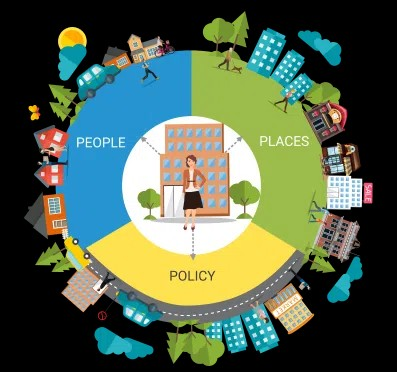
Those findings eventually evolved into the Blue Zones Project, a community-based initiative that works with cities across the United States to redesign environments so that healthier choices become the easier, more natural choices.
How Palm Springs Became Involved
Palm Springs officially began exploring the Blue Zones initiative in 2023, when the city partnered with Blue Zones on a readiness and feasibility assessment. The goal was to evaluate how Palm Springs could improve long-term community health, well-being, and quality of life. (pstribune.com)
In late 2024, Palm Springs formally launched its Blue Zones Project alongside several other Riverside County communities including Riverside, Banning, and Coachella. The initiative is supported through a partnership involving Riverside University Health System – Public Health, Eisenhower Health, Kaiser Permanente, Molina Healthcare, Inland Empire Health Plan Foundation, Riverside County, and local city governments. (PR Newswire)
The project is not simply a marketing campaign or wellness trend. It is designed as a multi-year transformation strategy focused on reshaping policies, public spaces, food access, transportation, workplaces, schools, restaurants, and social networks. (PR Newswire)
Why Palm Springs Is a Natural Fit
In many ways, Palm Springs already has characteristics associated with Blue Zones living:
A strong outdoor culture centered around walking, hiking, biking, tennis, and pickleball
A socially active population with community events, clubs, and neighborhood engagement
Access to fresh produce and healthy dining options
A large retiree population focused on wellness and active aging
A strong sense of identity and community pride
Palm Springs also faces challenges the Blue Zones Project hopes to address. Studies connected to the initiative found that many residents struggle with chronic health conditions, obesity, financial stress, and social isolation. (PR Newswire)
One particularly interesting finding was that while Palm Springs scored relatively well in some mental health and overall well-being categories, it ranked lower in social connectedness than neighboring communities. That matters because loneliness and isolation are increasingly recognized as major public health concerns, especially among older adults. (PR Newswire)
What Happens When a Community Becomes “Blue Zones Certified”?
Blue Zones certification is not about handing out plaques or creating elite wellness clubs. Instead, it involves measurable changes designed to improve daily life for everyone in the community.
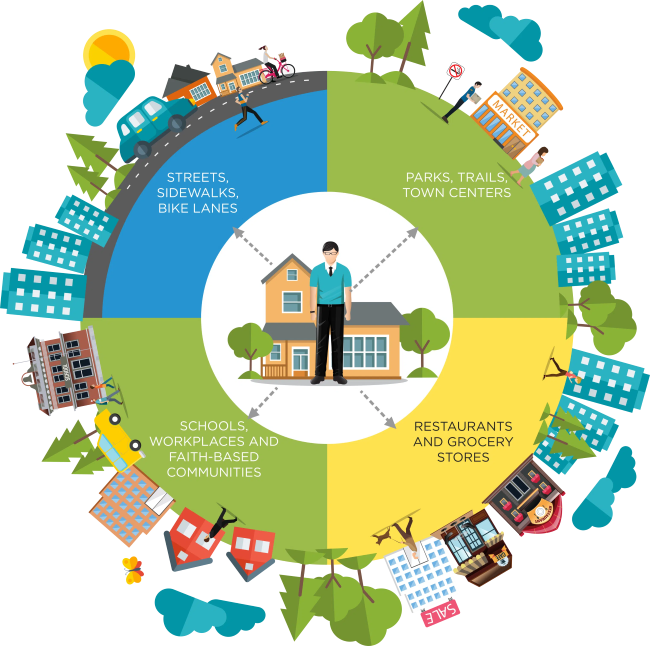
When a city participates, Blue Zones works with several categories of organizations and institutions, including:
Restaurants
Grocery stores
Schools
Worksites
Faith-based organizations
Neighborhood groups
Government agencies
The goal is to create healthier environments that influence everyday habits naturally.
For example, participating restaurants may:
Add healthier menu options
Offer smaller portions
Highlight plant-forward meals
Reduce processed foods
Workplaces may:
Encourage walking meetings
Improve employee wellness programs
Create healthier breakroom environments
Communities may:
Improve walkability and bike access
Expand public gathering spaces
Promote social interaction and volunteerism
Increase access to parks and recreation
Encourage smoke-free environments
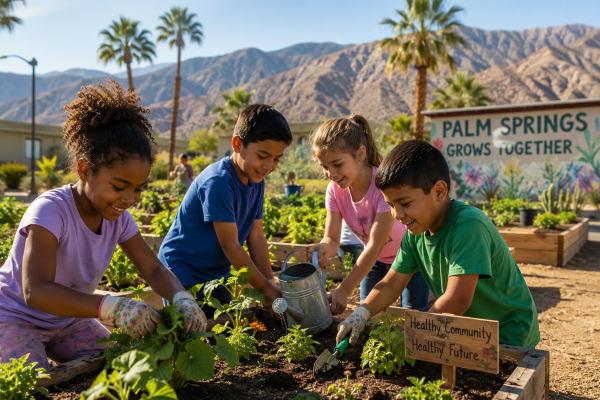
Residents can also participate through walking groups, cooking demonstrations, gardening workshops, purpose workshops, volunteer activities, and “Moai” social circles — small support groups inspired by Okinawan traditions.
The “Life Radius” Concept
One of the core ideas behind the Blue Zones Project is something called the “Life Radius.”
The philosophy is simple: most people spend roughly 90% of their lives within a relatively small area around home, work, school, and everyday errands. Instead of relying entirely on willpower, Blue Zones focuses on making those environments healthier by design. (Blue Zones)
That could mean:
More shaded walking paths
Safer pedestrian crossings
Better access to healthy groceries
More community gathering spaces
Social programming that reduces isolation
Policies that support active lifestyles
In a city like Palm Springs — where climate, architecture, recreation, and lifestyle already play major roles in quality of life — the concept feels particularly relevant.
Economic Benefits Beyond Health
The initiative also has economic implications.
Blue Zones research suggests participating communities often see:
Reduced healthcare costs
Increased workplace productivity
Lower smoking and obesity rates
Stronger civic engagement
Greater community pride
Increased attractiveness for retirees and wellness-minded residents
Blue Zones estimates that improving well-being in Palm Springs could potentially save more than $200 million in healthcare and related costs over the next decade. (PR Newswire)
For Palm Springs, a city already closely associated with wellness tourism, active retirement, and resort-style living, becoming identified as a true “wellness community” could further strengthen its reputation nationally.
What Comes Next?
The Palm Springs project officially kicked off in 2025 with a five-year implementation plan. Early efforts have focused on community engagement, local partnerships, and introducing residents to Blue Zones programming. (KESQ)
Organizers hope to eventually engage roughly 15% of the city’s population — considered the tipping point needed to create measurable community-wide change. (The Palm Springs Post)
Whether Palm Springs ultimately becomes one of the country’s premier Blue Zones communities remains to be seen. But the initiative reflects something many residents already value deeply: a lifestyle centered around connection, movement, sunshine, balance, and enjoying life at a slightly slower pace.
And honestly, if there were ever a city designed for sunset walks, outdoor patios, neighborhood friendships, and lingering over coffee while discussing architecture and pickleball scores… Palm Springs might already be halfway there.
Selling Your Home?
Get your home's value - our custom reports include accurate and up to date information.